How Solar PV System Works
What is a Solar PV System?
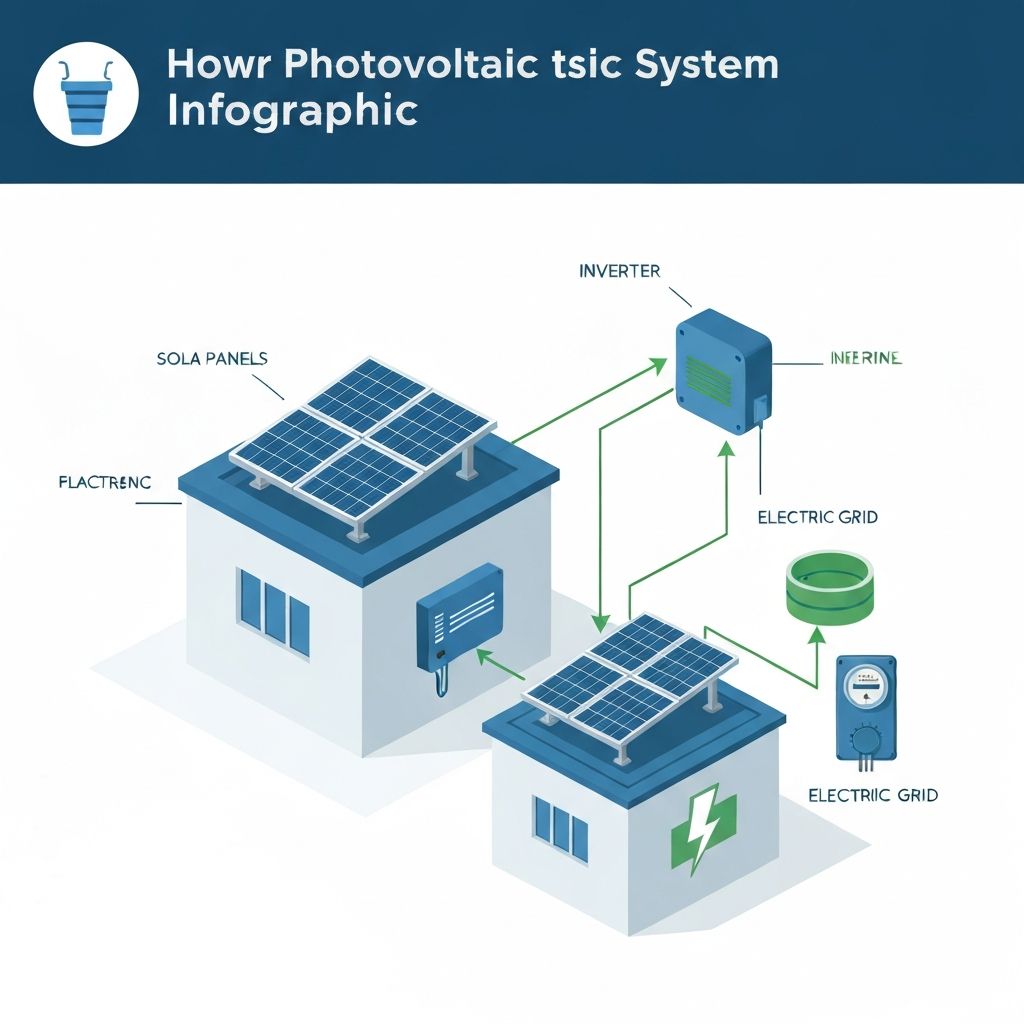
A Solar Photovoltaic (PV) system converts sunlight directly into electricity using semiconductor materials. When sunlight hits the solar cells, it excites electrons and creates an electric current. This is known as the photovoltaic effect.
Key Components
A typical solar PV system consists of: Solar Panels (modules made of silicon cells), Inverter (converts DC to AC power), Mounting Structure (secures panels to roof or ground), Cables and Connectors (transmit electricity), and Net Meter (measures energy import/export).
How It Generates Power
Solar panels absorb photons from sunlight, which knock electrons loose from atoms in the silicon cells. This creates a flow of electricity (DC). The inverter then converts this DC power to AC power that can be used by home appliances or fed into the grid.
Types of Solar PV Systems
On-Grid Systems are connected to the utility grid and can export excess power. Off-Grid Systems work independently with battery storage for areas without grid access. Hybrid Systems combine both approaches, offering grid connection plus battery backup for power outages.
How PV Thermal (PVT) Works
What is PV Thermal?
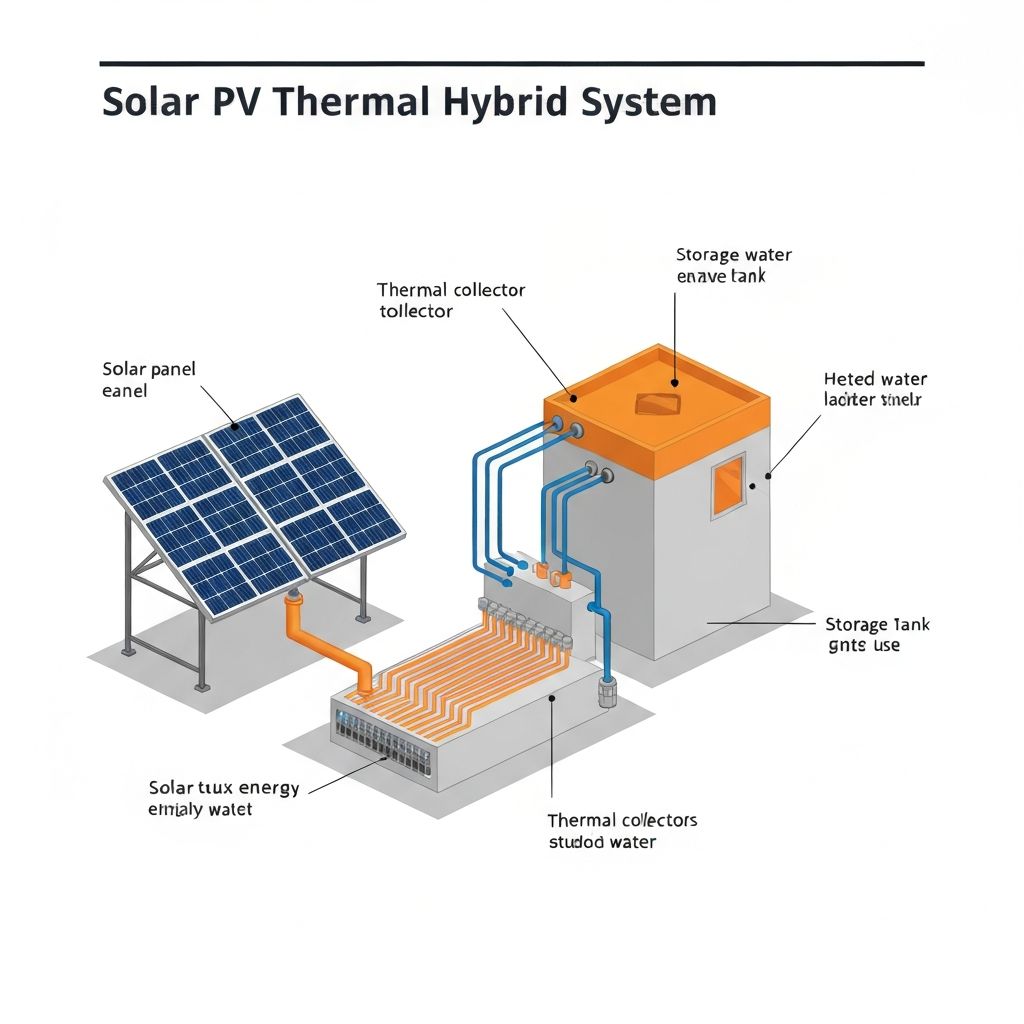
PV Thermal (PVT) is a hybrid technology that combines photovoltaic solar panels with thermal collectors. It simultaneously generates electricity and captures heat energy from the sun, making it more efficient than standalone PV or thermal systems.
The Dual Benefit
Traditional solar panels convert only about 15-20% of sunlight into electricity, with the rest becoming heat that actually reduces panel efficiency. PVT systems capture this excess heat and use it to heat water or air, achieving combined efficiencies of 60-80%.
How It Works
The PVT panel has a solar cell layer on top that generates electricity. Below this is a heat absorber with fluid channels. As sunlight hits the panel, electricity is generated while a heat transfer fluid (water or glycol) circulates through the absorber, collecting thermal energy.
Applications
PVT systems are ideal for buildings that need both electricity and hot water, such as hotels, hospitals, swimming pools, and residential homes. The thermal output can be used for domestic hot water, space heating, or even cooling through absorption chillers.
Net Metering & Gross Metering Concept
What is Net Metering?
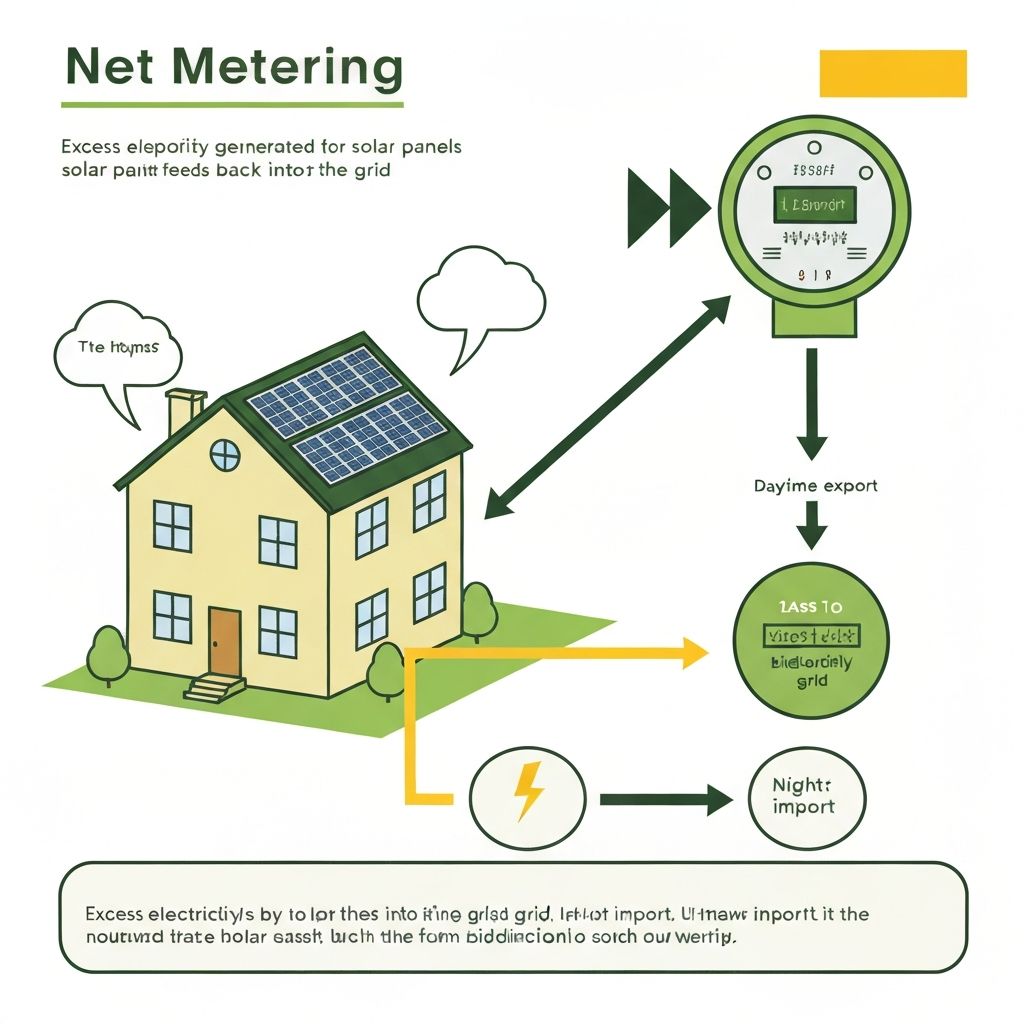
Net Metering is a billing mechanism that allows solar system owners to export excess electricity to the grid and receive credits. At the end of the billing period, you only pay for the 'net' energy consumed (total consumption minus total export).
How Net Metering Works
During the day, when your solar system generates more power than you use, the excess flows to the grid and your meter runs backward. At night, you draw power from the grid normally. Your bill reflects only the difference between import and export.
What is Gross Metering?
Gross Metering requires all solar-generated electricity to be exported to the grid at a fixed feed-in tariff rate. The consumer then purchases all their electricity needs from the grid at retail rates. Two separate meters track generation and consumption.
Which is Better?
Net Metering is generally more beneficial for residential users as it offers higher effective rates for exported power (equal to retail rate). Gross Metering may be preferred when feed-in tariffs are attractive or for large commercial installations seeking predictable revenue.
Policy in India
Most Indian states support net metering for rooftop solar up to certain capacity limits (typically up to 500 kW for commercial and 10 kW for residential). Policies vary by state, and Solwer helps navigate the regulatory requirements for your location.
CAPEX and OPEX Solar Business Models
CAPEX Model (Capital Expenditure)
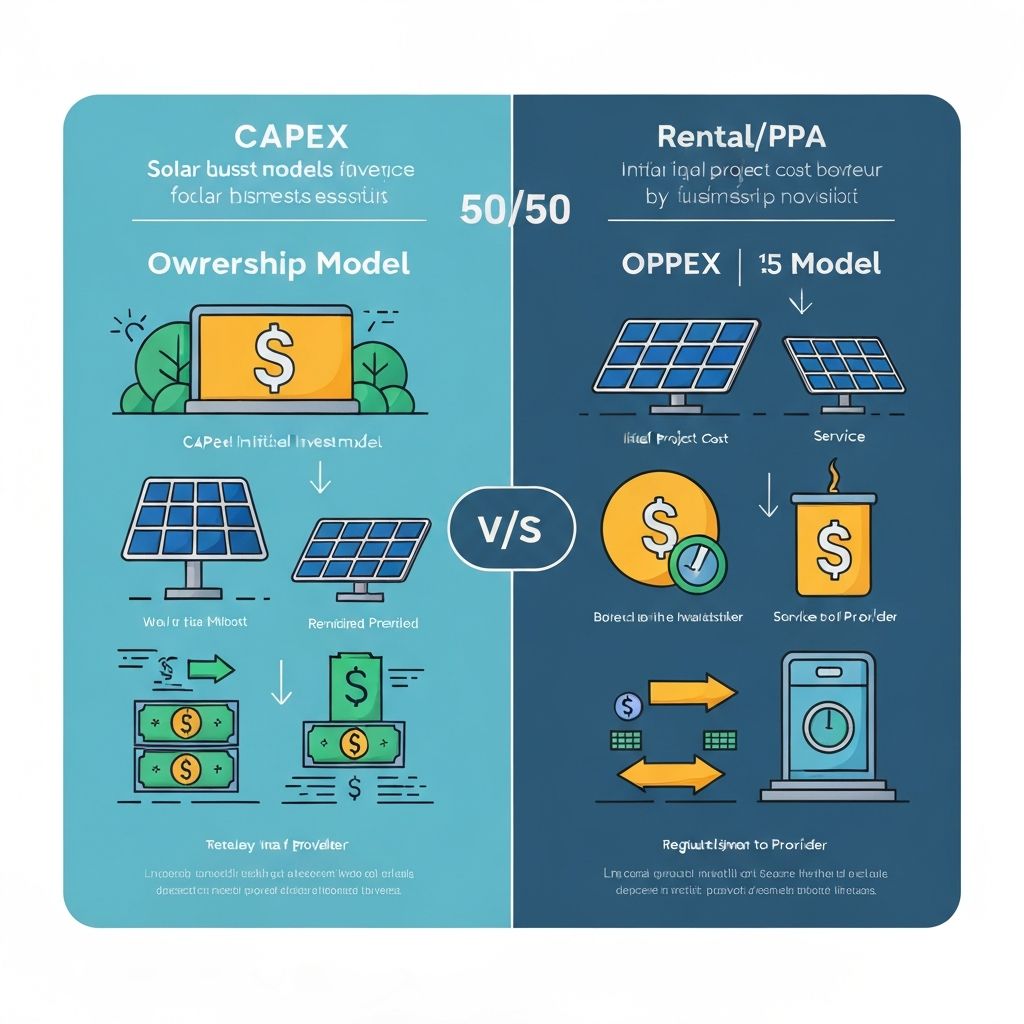
In the CAPEX model, the customer owns the solar system outright by making an upfront investment. You pay for the complete system installation and own all the equipment. This model offers maximum long-term savings and full control over your asset.
Benefits of CAPEX
Complete ownership of the system, highest ROI over system lifetime (typically 25+ years), eligibility for government subsidies and accelerated depreciation benefits, no recurring payments after installation, and freedom to modify or expand the system.
OPEX Model (Operational Expenditure)
In the OPEX model, a third-party developer installs and owns the solar system on your premises. You pay only for the electricity generated at a predetermined rate (PPA - Power Purchase Agreement) or a fixed monthly lease. Zero upfront investment required.
Benefits of OPEX
No capital investment needed, immediate savings from day one (typically 20-40% lower than grid tariff), maintenance and performance guaranteed by the developer, predictable energy costs for contract duration (15-25 years), and risk-free solar adoption.
Which Model to Choose?
Choose CAPEX if you have available capital and want maximum long-term savings with asset ownership. Choose OPEX if you prefer zero upfront investment, want to preserve capital for core business, or cannot claim depreciation benefits. Solwer offers both models to suit your needs.